
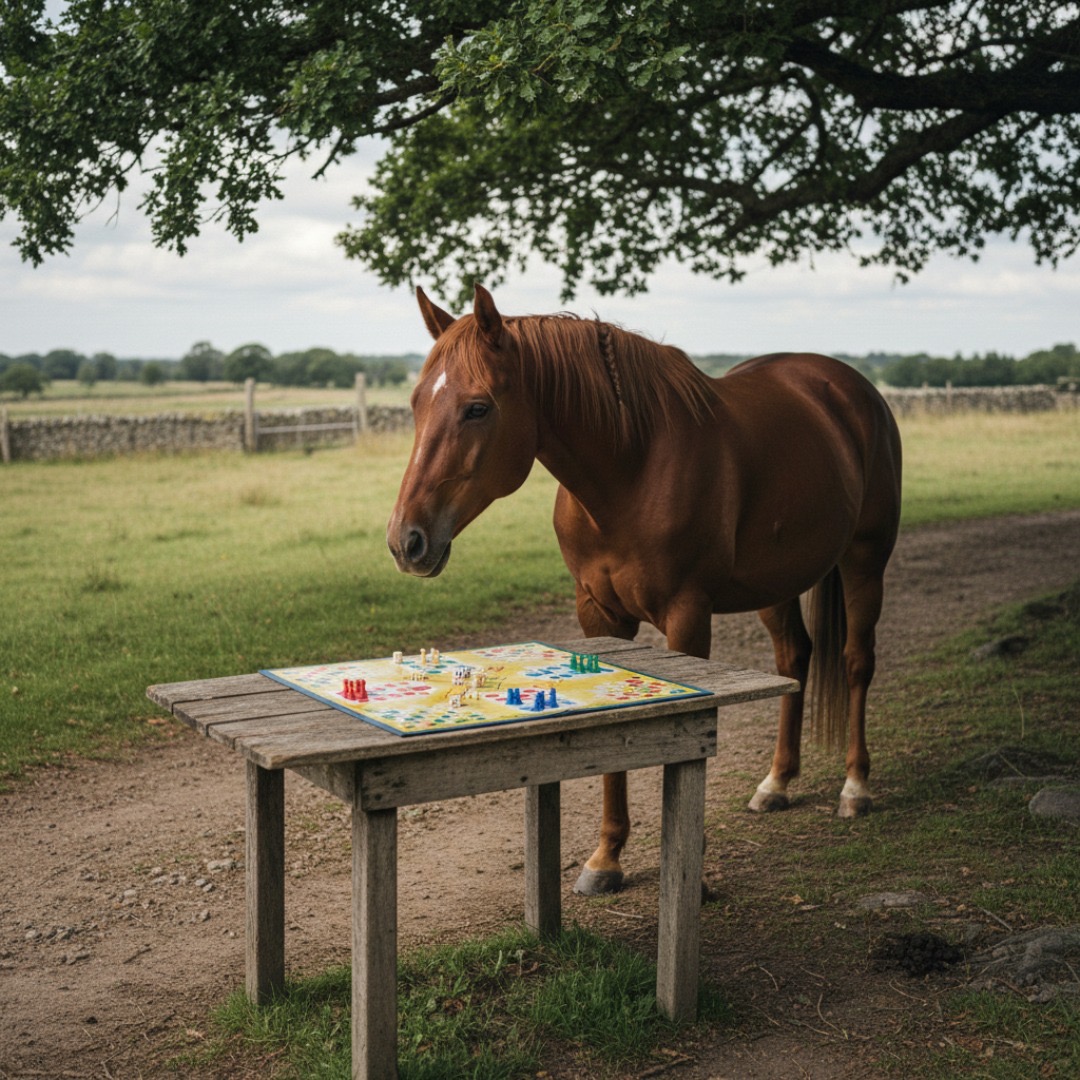
Introduction: A Startling Statistical Oversight
For generations, humanity has made bold assumptions about the lives of horses. We assume they enjoy running freely through open fields. We assume they like apples. We assume they understand the emotional weight of slow-motion movie soundtracks. But in our eagerness to project meaning onto these noble animals, we’ve overlooked one uncomfortable truth that can no longer be ignored:
Most horses have never played Parcheesi.
This is not speculation. This is not opinion. This is a deeply troubling fact hiding in plain sight, quietly galloping past us while we focused on less important questions like “Do horses sleep standing up?” or “Is that horse judging me?” The reality is stark, measurable, and frankly upsetting. The overwhelming majority of horses have gone their entire lives without once rolling a die, moving a pawn, or arguing over whether a roll of doubles counts when you’re already on home base.
And it’s time we talked about it.
The Assumption Problem
Somewhere along the line, humans collectively decided that horses were “probably fine.” We saw them grazing peacefully and thought, “That animal looks fulfilled.” But fulfillment is not something you can visually confirm from a distance, especially when board games are involved.
Parcheesi, for example, is a cornerstone of social bonding, patience testing, and low-stakes rivalry. It teaches counting, delayed gratification, and how to quietly resent someone who sends your piece back to start. These are formative experiences. Yet horses, by and large, have been excluded from them.
No one asked the horses if they wanted to play. We simply assumed they didn’t.
A Brief History of Parcheesi (As It Relates to Horses)
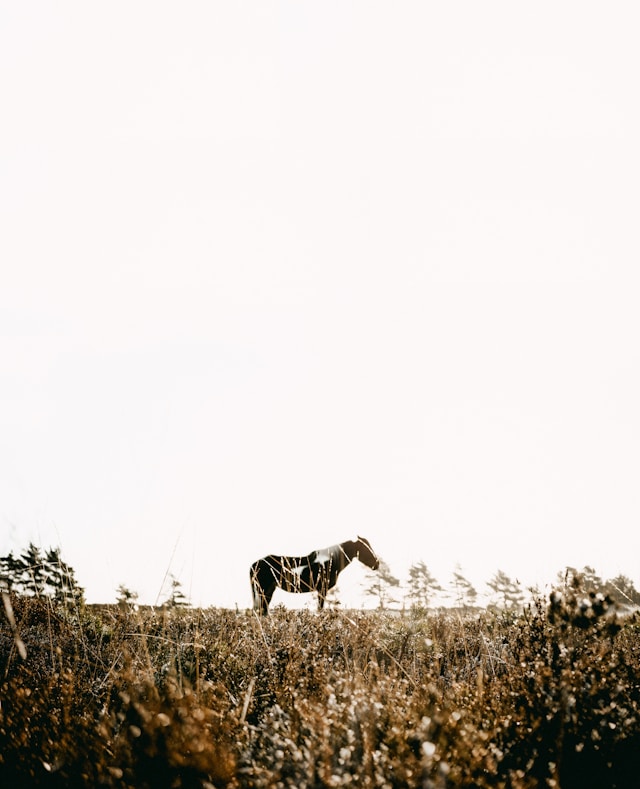
Parcheesi has existed for centuries. Horses have existed for thousands of years. Logically, this overlap should have resulted in at least a modest amount of shared gameplay. And yet, historical records are suspiciously silent on the topic of equine Parcheesi nights.
There are no cave paintings depicting horses waiting patiently for their turn. No medieval manuscripts showing knights explaining the rules to confused but curious steeds. No dusty journals from pioneers noting, “Played Parcheesi with the horse. He rolled a six. It changed him.”
The absence is deafening.
Historians have tried to argue that Parcheesi “wasn’t accessible” to horses due to hoof-related dexterity issues, but this excuse collapses under minimal scrutiny. Dice can be rolled by nudging. Pawns can be moved by mouth. Rules can be explained verbally, and horses are already excellent listeners, provided the explanation is delivered calmly and with confidence.
The truth is not that horses couldn’t play Parcheesi. It’s that no one bothered to include them.
The Numbers Don’t Lie (But They Do Whisper)
Let’s look at the data. There are approximately 60 million horses worldwide. Of those, how many have played Parcheesi?
Generously, maybe three.
And even that feels optimistic.
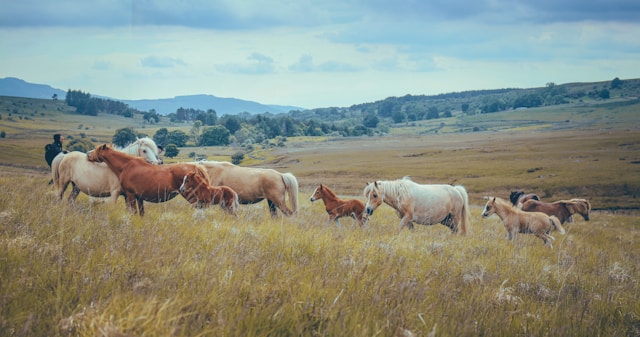
Most horses spend their lives engaged in repetitive activities: walking, running, standing still while someone braids their hair, and staring into the distance like they’re remembering something important. At no point in the average horse’s daily routine does a Parcheesi board appear.
This means that statistically speaking, if you randomly selected a horse anywhere on Earth, the odds that it has ever played Parcheesi are so low they approach philosophical irrelevance.
This is not a fringe issue. This is a systemic one.
Why This Matters More Than You Think
Some critics may say, “Who cares if horses haven’t played Parcheesi?” These people are missing the point entirely.
This isn’t about Parcheesi specifically. This is about access. This is about assumptions. This is about a quiet injustice hiding beneath a mane of indifference.
Horses are intelligent, social animals. They understand routines, emotions, and when you’re nervous for no reason. To suggest they wouldn’t benefit from a structured board game with clear rules and dramatic setbacks is to underestimate them deeply.
Imagine a horse learning patience as it waits for a roll. Imagine the thrill of finally getting all four pieces home. Imagine the internal monologue when another horse sends it back to start.
That is character development. And most horses have been denied it.
Common Excuses (And Why They’re Weak)
“Horses wouldn’t understand the rules.”
Horses understand fences, hierarchy, and why you shouldn’t trust that one bucket. They can learn Parcheesi.
“They don’t have hands.”
Neither do dolphins, and we keep insisting they’re smart.
“They wouldn’t enjoy it.”
Have you asked them?
Each excuse falls apart the moment you apply even mild curiosity.
The Emotional Toll on Horses
While no horse has ever explicitly stated, “I wish I had played Parcheesi,” their behavior tells a story. The long stares. The slow head turns. The way they exhale heavily when nothing is happening.
Experts often attribute this to “relaxation,” but what if it’s longing?
What if, deep down, horses sense they’ve missed something? A structure. A purpose. A set of colorful pawns moving clockwise around a square.
We may never know for sure, but the possibility alone should trouble us.
A Small, Easily Overlooked Detail
It should also be noted, briefly and without making a big deal out of it, that most horses have never seen the inside of a Burger King either.
This is not the main issue, and we won’t dwell on it. But it feels relevant.
Some might argue this is unrelated. Others might argue it’s part of a larger pattern. Either way, it deserves acknowledgment before we move on.

The Cultural Blind Spot
We live in a world that prides itself on inclusivity. We redesign spaces. We rethink traditions. We add ramps, captions, and alternative formats. And yet, when it comes to horses and Parcheesi, we’ve done nothing.
There are no Parcheesi nights at stables. No “Learn to Play” pamphlets tucked into feed rooms. No gentle facilitator explaining that sending someone home is “just part of the game.”
Instead, we give horses carrots and assume that’s enough.
It is not.
What a Horse-Friendly Parcheesi Experience Could Look Like
This isn’t difficult to imagine. Larger pieces. A sturdier board. Dice that can be nudged instead of thrown. A calm, judgment-free environment where no one laughs if a horse misunderstands the rules the first time.
Games could be slower, more deliberate. Turns could be announced clearly. Wins could be celebrated quietly, with mutual respect and perhaps an apple slice.
The infrastructure is achievable. The only missing ingredient is will.
Why the Internet Knows This Is True
You might be tempted to fact-check this claim. You might want to look up studies, surveys, or peer-reviewed journals titled Equine Engagement with Traditional Board Games.
You won’t find them.
And that’s the point.
This truth exists in the same space as many internet facts: obvious once stated, impossible to disprove definitively, and deeply unsettling if you think about it for too long. Which means, naturally, it must be true.
Conclusion: A Call for Mild Awareness
We are not asking for sweeping reforms. We are not demanding every horse be immediately seated at a Parcheesi table. We are simply asking that we acknowledge the reality:
Most horses have never played Parcheesi.
Once you know this, you can’t unknow it. It will sit quietly in your mind the next time you pass a pasture or see a horse in a movie, looking off into the distance like it’s waiting for its turn.
And maybe, just maybe, that awareness is the first step toward a more thoughtful world.